Dwell time, in motion
Notes · The chemistry
Dwell time, in motion
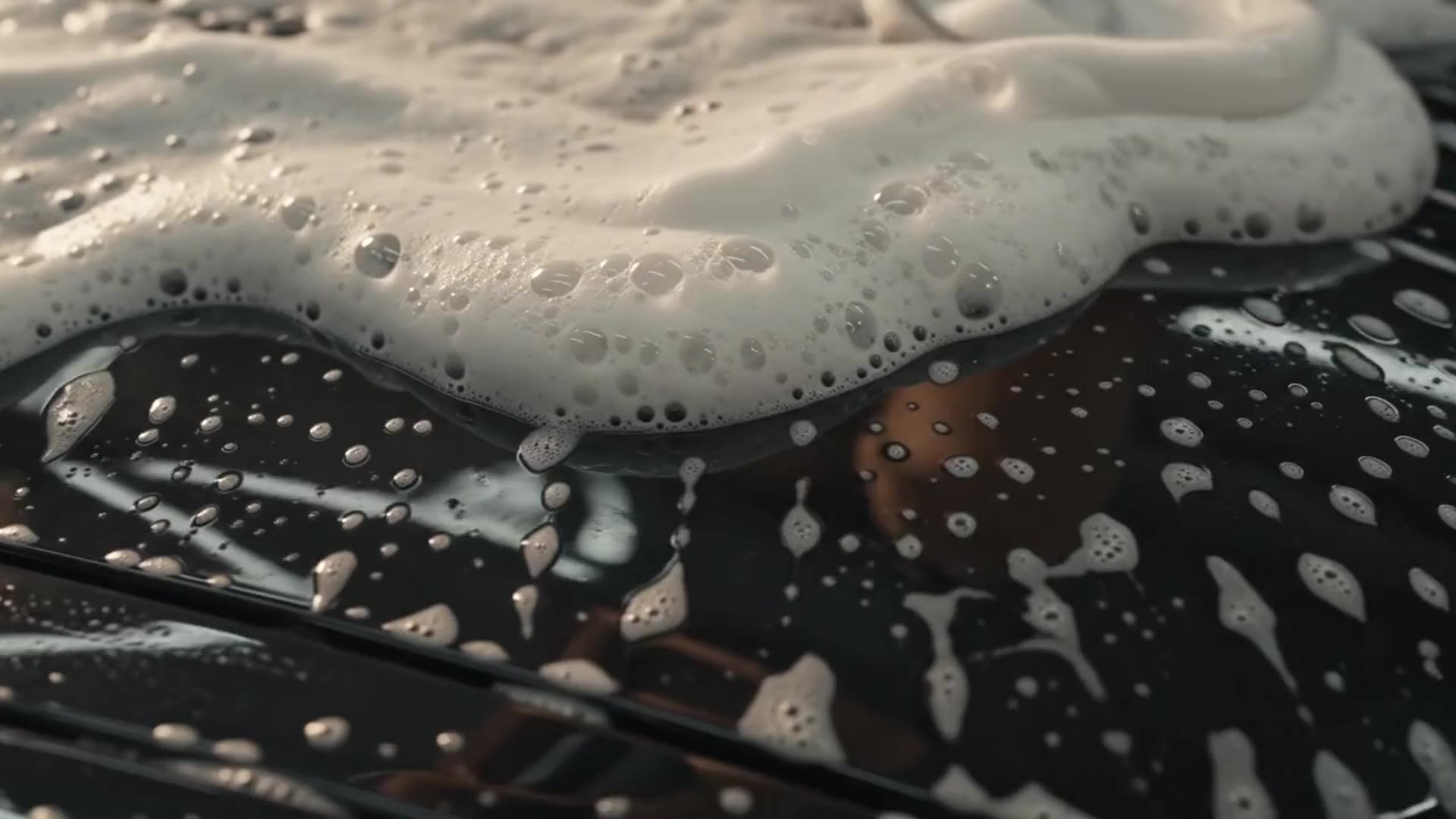
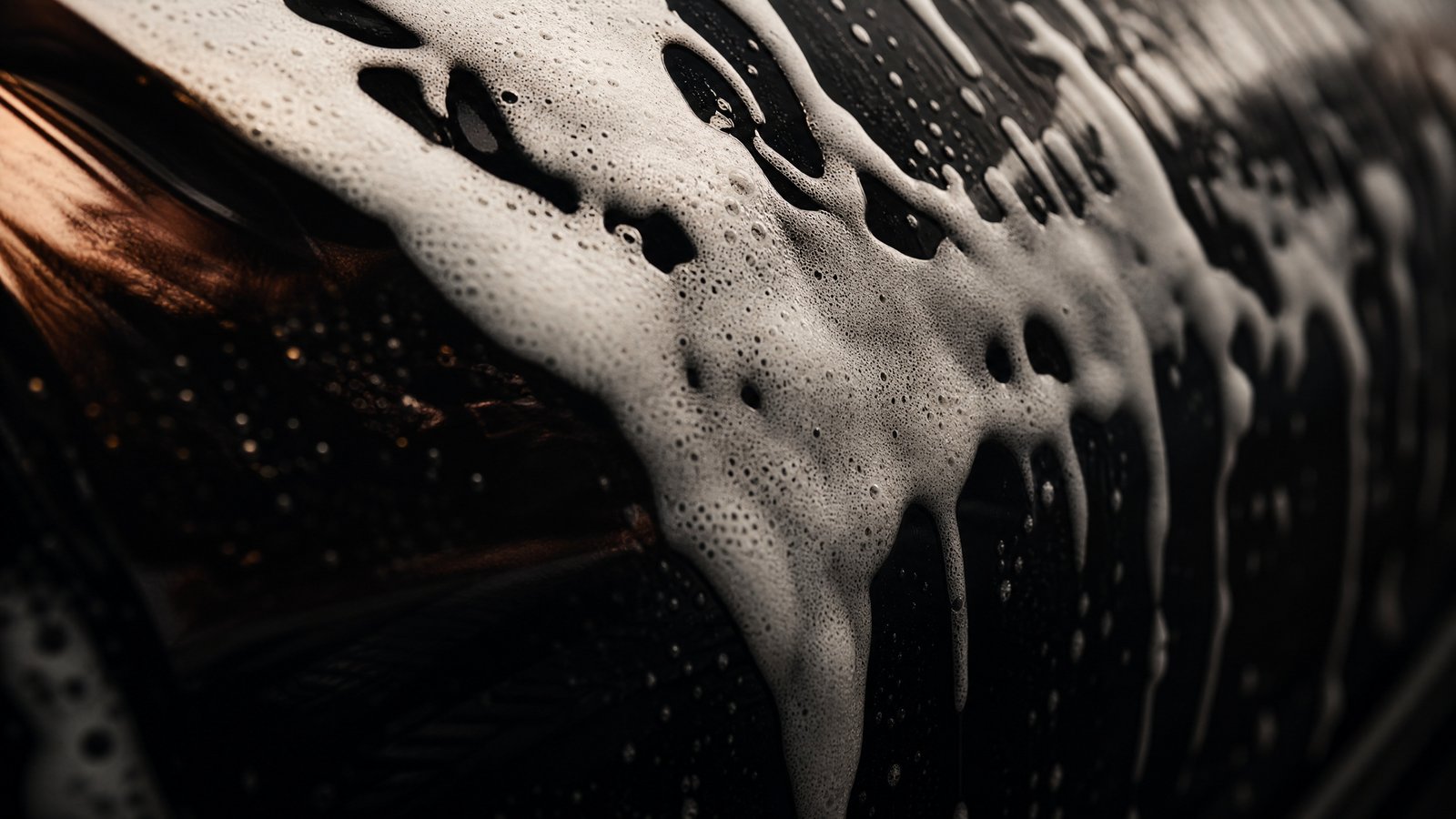
The pictures make foam look like theater. It isn't. It's the part of the wash that happens before anything touches the car — and it's the reason the mitt never has to fight.
A week of driving leaves paint wearing a film of road grit, brake dust, and traffic residue. Rub that with anything, even the softest wool, and you're sanding your own clearcoat. So the foam goes on first: a thick pH-neutral blanket whose surfactants creep under the grit, lift it off the surface, and hold it in suspension.
Then the car just sits there wearing it. That's the dwell — the several quiet minutes when chemistry does what force shouldn't. When the foam finally slides off, it takes most of the week with it, and everything that follows touches clean paint instead of grinding a dirty film.
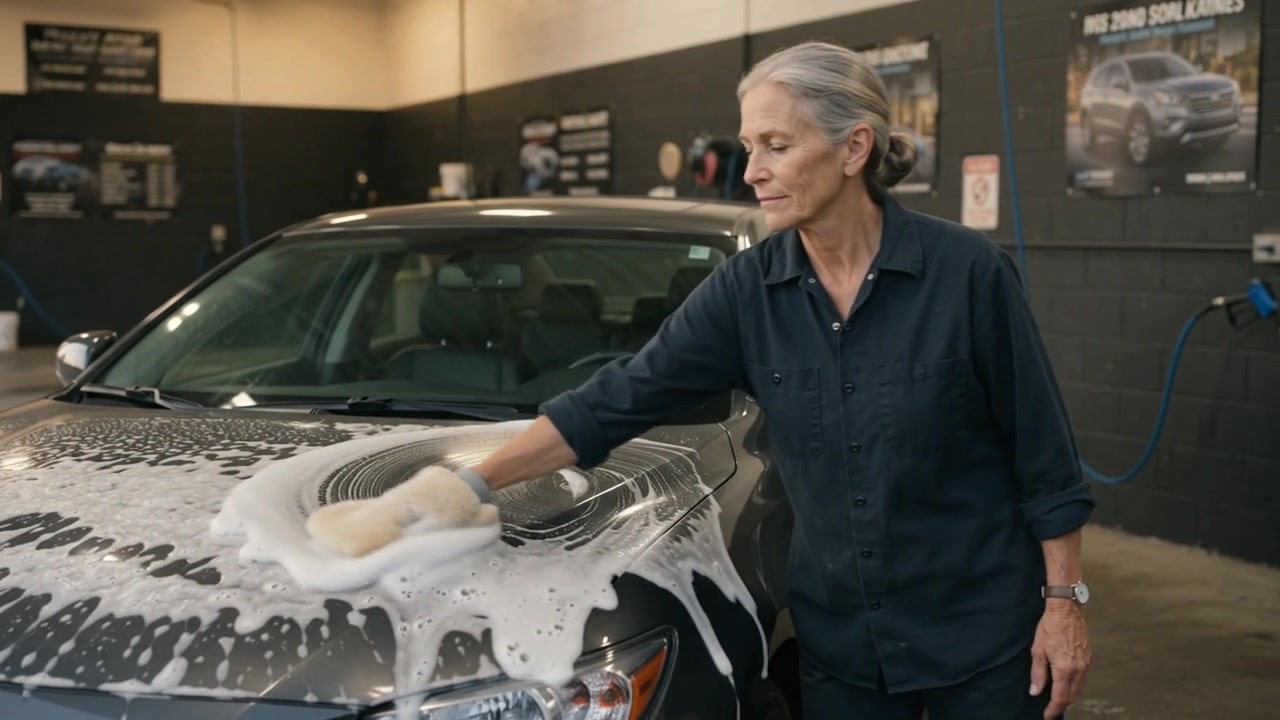
Rinse, and only then does the mitt come out. Two buckets from there — the vows explain the rest.
Where the grit ends up
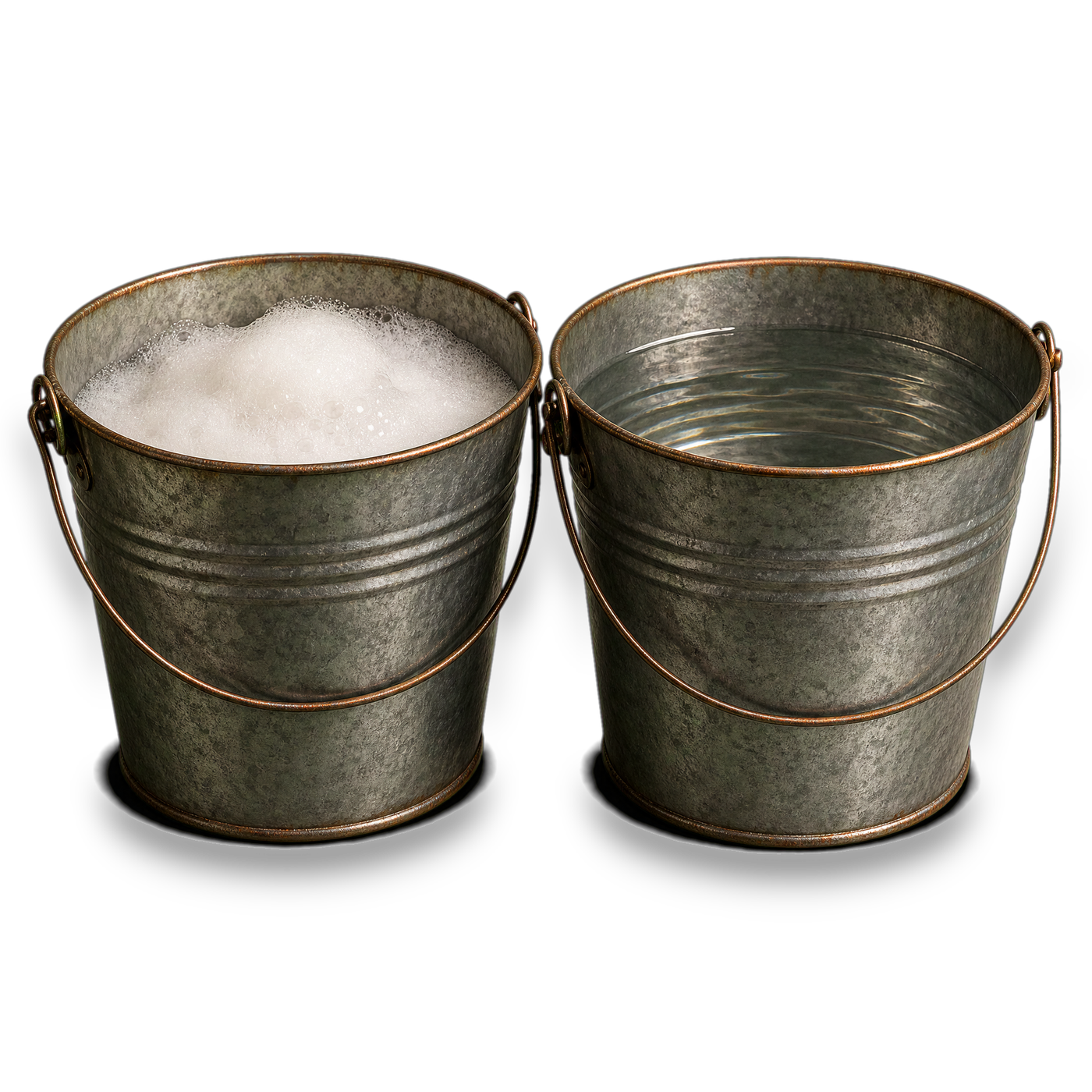
That's the quiet partnership: the foam loosens the week, the wash carries it off, and the second bucket is where it settles for good — at the bottom, under the grit guard, never to see your paint again.
Book the bay and watch the first hour happen.